
Anxiety is not a single problem with a single solution. It is a category of experiences that range from persistent worry and rumination to panic, avoidance, and emotional dysregulation. Because of that, the therapeutic approach that works best often depends less on the diagnosis and more on how anxiety shows up in a person’s thinking, behavior, and nervous system.
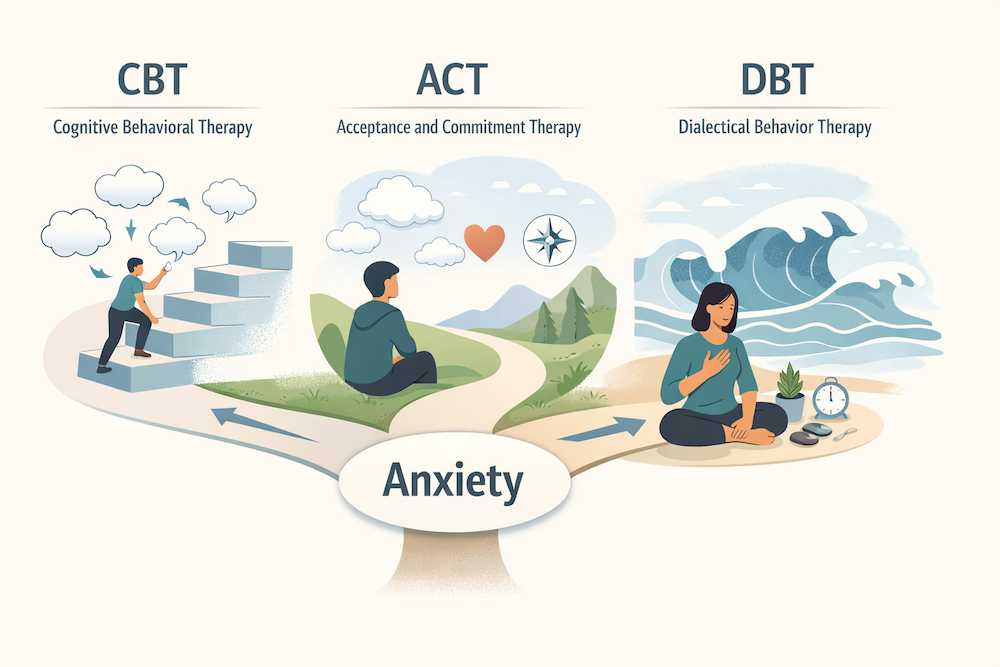
Three of the most widely used evidence-based therapies for anxiety are Cognitive Behavioral Therapy (CBT), Acceptance and Commitment Therapy (ACT), and Dialectical Behavior Therapy (DBT). They are often grouped, but in practice, they represent very different philosophies about how change happens. Understanding those differences is what allows clinicians to choose the right approach for the right person at the right time.
CBT: Changing the Thought to Change the Feeling
Cognitive Behavioral Therapy is the most structured and traditionally dominant approach to anxiety treatment. At its core is a simple premise: thoughts influence emotions, and by changing distorted or unhelpful thoughts, emotional distress can be reduced.
In practice, CBT focuses on identifying cognitive distortions such as catastrophizing, black-and-white thinking, or overgeneralization. A person with anxiety might believe, “If I make a mistake in this meeting, I’ll be judged and lose credibility.” CBT does not accept that thought at face value. Instead, it challenges it through evidence, logic, and alternative interpretations.
Behavioral components are equally central. Exposure therapy, a core CBT technique, gradually introduces individuals to feared situations in a controlled way. The goal is not just intellectual insight but experiential learning that anxiety can decrease without avoidance.
CBT tends to work best for individuals whose anxiety is driven by identifiable thought patterns and avoidance behaviors. It is especially effective when clients are willing to engage actively in structured exercises, homework, and cognitive restructuring. For many clinicians, CBT is the first-line intervention because of its strong research base and relatively short-term nature.

ACT: Changing the Relationship to the Thought
Acceptance and Commitment Therapy takes a fundamentally different approach. Instead of trying to change thoughts, ACT focuses on changing how a person relates to them.
From an ACT perspective, the problem is not that anxious thoughts exist, but that people become entangled with them. When someone treats a thought as literal truth rather than a passing mental event, it gains power. ACT introduces techniques like cognitive defusion, which help individuals observe thoughts without automatically believing or reacting to them.
Acceptance is another key pillar. Rather than attempting to eliminate anxiety, ACT encourages willingness to experience discomfort in the service of meaningful action. This is paired with values work, helping individuals clarify what matters to them and take steps aligned with those values, even when anxiety is present.
ACT is often chosen when anxiety is persistent, intrusive, or resistant to traditional cognitive restructuring. It is particularly useful for individuals who feel stuck in cycles of overthinking or who have already tried to “fix” their thoughts without success. In these cases, shifting the goal from control to flexibility can produce more sustainable change.
DBT: Regulating the Emotional System
Dialectical Behavior Therapy was originally developed for individuals with intense emotional dysregulation, but it has become increasingly relevant for anxiety presentations that involve overwhelm, impulsivity, or difficulty managing distress.
DBT is built around four core skill areas: mindfulness, distress tolerance, emotion regulation, and interpersonal effectiveness. While CBT and ACT often focus on cognition and meaning-making, DBT focuses more directly on stabilizing the emotional system.
For someone whose anxiety escalates quickly into panic or shutdown, cognitive techniques may not be accessible in the moment. DBT provides practical tools to manage those states, such as grounding exercises, paced breathing, and crisis survival strategies. Over time, it also builds longer-term skills for reducing vulnerability to emotional spikes.
Clinicians tend to choose DBT when anxiety is part of a broader pattern of emotional instability or when clients struggle with self-soothing and distress tolerance. It is especially effective for individuals who feel overwhelmed by their emotions rather than primarily trapped in distorted thinking.

How Clinicians Actually Choose Between Them
In practice, clinicians are not choosing between CBT, ACT, and DBT as rigid categories. They are assessing patterns.
One of the first considerations is what maintains the anxiety. If it is driven by distorted thinking and avoidance, CBT is often the most direct fit. If it is driven by over-identification with thoughts and a constant effort to control internal experiences, ACT may be more appropriate. If it is driven by rapid emotional escalation and poor regulation, DBT skills become essential.
Another key factor is client readiness and preference. Some individuals respond well to structured, problem-solving approaches like CBT. Others find that approach invalidating or exhausting, particularly if they have already spent years trying to “think their way out” of anxiety. For them, ACT’s emphasis on acceptance or DBT’s focus on skills can feel more accessible.
Clinicians also consider comorbidity and complexity. Anxiety rarely exists in isolation. When it co-occurs with depression, trauma, or personality-related difficulties, a more flexible or integrative approach is often needed. DBT may be prioritized for stabilization, with ACT or CBT layered in later.
Importantly, many experienced clinicians do not adhere strictly to one model. They integrate elements across therapies, using CBT for exposure work, ACT for cognitive flexibility, and DBT for emotional regulation. The choice is less about allegiance to a framework and more about precision in addressing what the individual actually needs.
The Shift From Technique to Fit
What differentiates effective anxiety treatment is not just the method, but the match. CBT, ACT, and DBT each offer powerful tools, but their effectiveness depends on how well they align with the underlying mechanisms of a person’s anxiety.
The field has been gradually shifting away from the question of “Which therapy is best?” toward “Which process is most relevant here?” That shift reflects a more nuanced understanding of anxiety as a multi-dimensional experience rather than a single disorder.
Author Bio:
Erin Zadoorian is the Co-Founder of Exhale Wellness, where he focuses on building high-quality hemp and cannabinoid products for modern consumers. His work centers around product innovation, transparency, and educating customers about CBD and THC alternatives, helping people make more confident and informed choices in the cannabis space.
 Email
Email Opening Hours
 Receptionist